
Our science
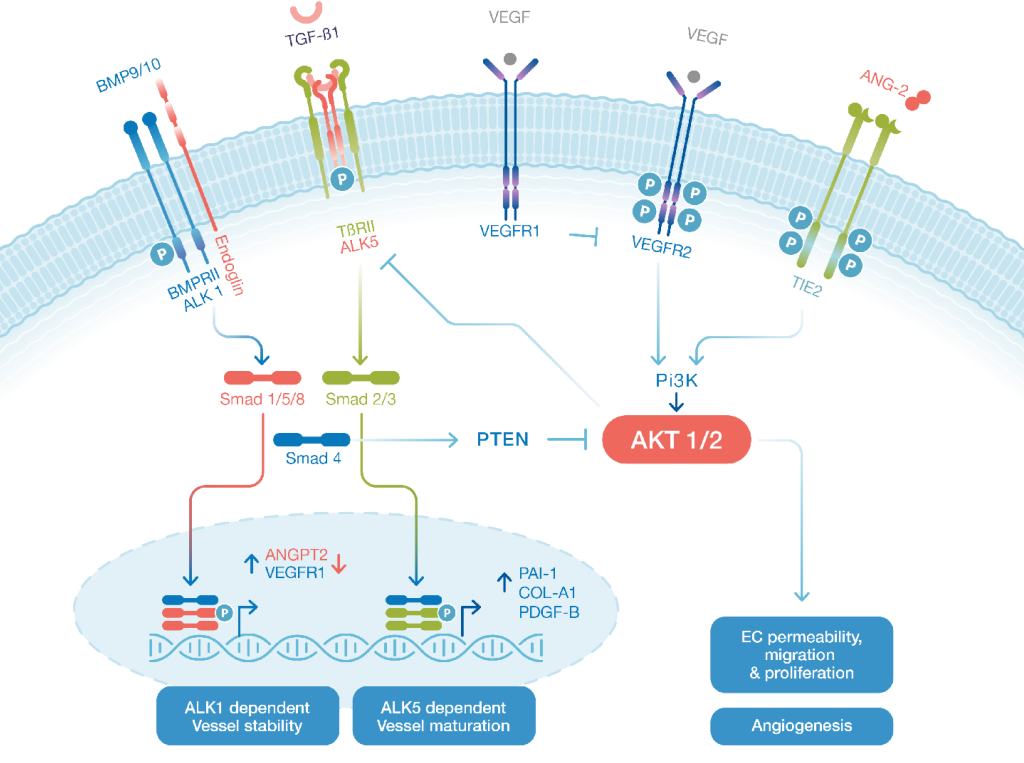
Molecular pathway in HHT
BMP9 and BMP10 are essential circulating ligands that maintain blood vessel stability. They signal through a receptor complex composed of ALK1 (ACVRL1), Endoglin (ENG), and BMPRII.
When ENG (HHT1) or ACVRL1 (HHT2) are mutated, this signaling pathway is disrupted, triggering a cascade of abnormal responses:
- Increased pro-angiogenic signaling (via VEGFR2 and TIE2) and loss of
SMAD-dependent PTEN, leading to elevated AKT activity - Reduced ALK5-Smad3 signaling
These changes drive uncontrolled angiogenesis and poor vessel maturation, resulting in fragile, dilated arteriovenous malformations (AVMs) that are prone to rupture and bleeding.
Therapeutic approach: Targeting AKT1 and AKT2 with Engasertib
Engasertib, a selective allosteric inhibitor of AKT1/2, achieved complete suppression of AVM development in preclinical HHT models, at doses which do not induce hyperglycemia.
Engasertib acts by:
- Normalizing abnormal angiogenesis by restoring physiological endothelial migration (AKT2-driven) and proliferation (AKT1-driven)
- Correcting defective ALK5-Smad3 signaling